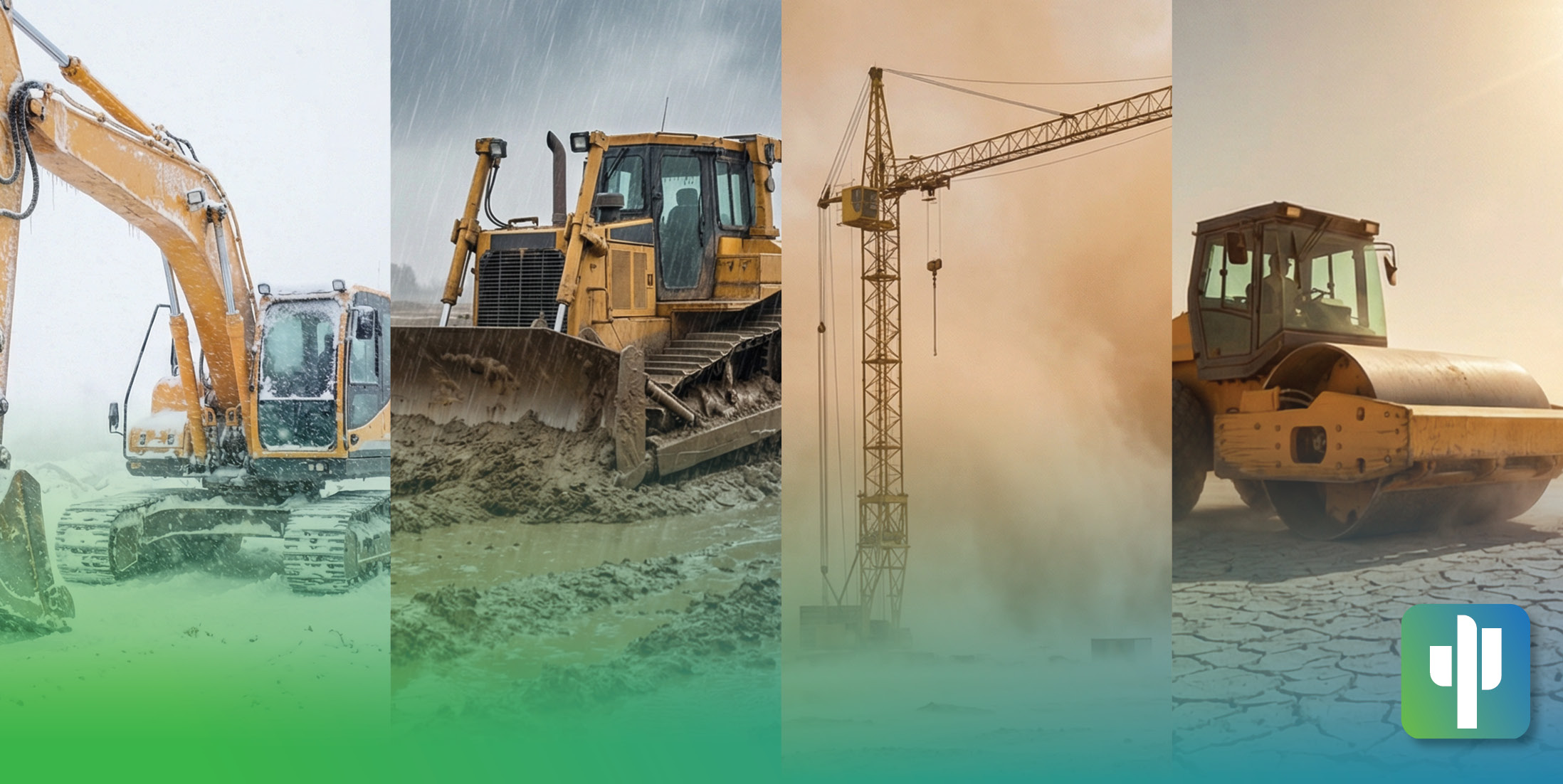
In Québec, weather is no longer a stable factor we can rely on. Heat waves are lasting longer, heavy rainfall events are becoming more frequent, and the seasons themselves are increasingly unpredictable. On a job site, these shifts translate into hard-to-manage disruptions, premature wear on materials, accelerated aging of equipment, and, above all, greater fatigue among workers. Health and safety are directly at stake: heat stress, dehydration, slips, and falls caused by rain are becoming more common.
Climate change is not just an environmental issue; in construction it has become an operational one, disrupting planning, scheduling, execution, and costs. Can we still build the way we did ten years ago? Absolutely not. Companies need to integrate these realities right from the project design stage, anticipating their impact at every step, earthworks, concrete pouring, roofing, landscaping. No outdoor construction site is immune to weather extremes.
Planning smartly with climate in mind
Planning has become a strategic lever for absorbing the unexpected. It’s no longer just about meeting a schedule; it’s about designing that schedule with climate and other risk factors in mind. Assigning the most physically demanding tasks to cooler hours of the day, early mornings or late afternoons, helps protect crews from extreme heat while maintaining productivity.
This is where technology plays a critical role. By integrating forecasts, weather alerts, and task-specific execution guidelines directly into planning, we can react quickly: reschedule a concrete pour, move up an installation, or shield sensitive materials. Adjusting work hours during heat waves, through shift rotations, shaded breaks, or even staggered schedules, is not only a safety measure but also a way to avoid hidden costs. After all, a complete work stoppage is always more expensive than a preventive adjustment.
Anticipating at the annual and budgetary scale
RClimate adaptation isn’t just a short-term challenge. It requires year-round planning that considers inventories, supply chains, and budgets. Delivery times can be disrupted by major weather events, just as material prices can fluctuate due to scarcity or sudden spikes in demand after a storm or flood.
Factoring in indirect climate-related costs, such as protective coverings, shaded rest areas, or temporary water evacuation systems, helps prevent heavier unforeseen expenses down the road. Project schedules also need to include smart buffer periods: adding just a few extra days in the timeline can prevent major overruns if weather conditions make work impossible for several days in a row. That kind of flexibility is often what separates a profitable project from one that runs at a loss.
Regulations and government incentives
Adaptation doesn’t rely solely on the goodwill of companies: regulations are evolving quickly to govern working conditions in the face of climate risks. In Québec, new standards now require things like facilities that allow workers to cool down, mandatory rest periods during heat waves, and specific measures to limit exposure to sun and severe weather.
At the same time, several funding programs already support sustainable construction and climate adaptation initiatives, such as ÉcoPerformance and Action-Climat Québec, which respectively promote energy efficiency and the mobilization of local stakeholders. These financial incentives encourage energy optimization in buildings, the use of materials that can withstand climate stress, and the deployment of innovative solutions to reduce environmental impact. In the same spirit, green certifications (LEED, BOMA, etc.) provide a real competitive advantage, not only to attract clients, but also to position a company as proactive and responsible in a rapidly changing sector.
Given this regulatory evolution and the financial incentives available, the question is no longer “hould we adapt?” but rather “how can we adapt in a profitable and sustainable way?”
Act now to stay competitive
Adapting construction sites to climate change is not a luxury or a burden, it’s a survival requirement in an increasingly demanding market. By integrating weather and its uncertainties into planning, allowing for financial buffers, and taking advantage of available incentives and regulations, companies can not only limit risks but also improve overall performance.
At Cactusoft, we know that the realities of the field leave no room for improvisation. Our approach is to support you through this transformation, putting technology at the service of your organization, and making climate a factor integrated into your strategy rather than an unpredictable obstacle. After all, it’s better to plan site resources with climate in mind than to fight against it. And when last-minute changes are unavoidable, whether it’s rescheduling a job, reassigning crews to a different site, or shifting tasks, Cactusoft helps you adapt in just a few clicks.
Liked this article?
Join our community to get the latest updates about us and the construction industry.